
Kuldip Sidhu
Michael J. Roy
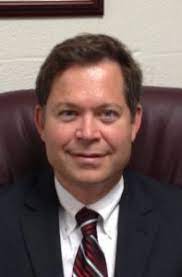
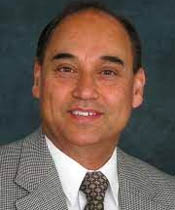
Michael Roy, MD, Col. (Ret.) is professor of Medicine and director of the Division of Military Internal Medicine at Uniformed Services University and director of Recruitment for USU’s Center for Neuroscience and Regenerative Medicine. He is a graduate of Brown University and Brown University School of Medicine. Dr. Roy completed an internal medicine residency and a general medicine fellowship at Walter Reed Army Medical Center, and retired as a Colonel after 24 years’ active duty in the Army. He has twice served as president of the Society for Brain Mapping and Therapeutics (SBMT), and is a Fellow of the American College of Physicians. He has authored more than 100 publications including the books Physician’s Guide to Terrorist Attack and Novel Approaches to the Diagnosis and Treatment of Post traumatic Stress Disorder. Dr. Roy is currently the principal investigator on multiple active studies seeking to improve the early identification and treatment of post traumatic stress and traumatic brain injury. Many of the studies incorporate cutting-edge technologies, including functional MRI to both detect PTSD and document a response to treatment, the use of virtual reality to enhance the treatment of PTSD, and the use of smart phones and tablet devices to reach out to patients and help them with their symptoms at a distance.
Mike Y. Chen
Michael Okun
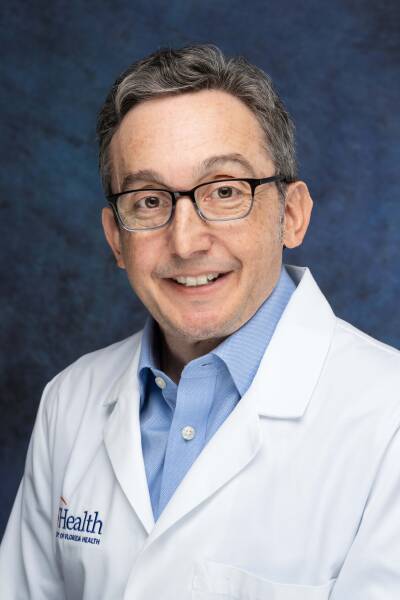
My name is Michael Okun, MD, and I am a board-certified neurologist, movement disorders specialist, neuroscientist and author who practices with the philosophy that ‘the patient is the sun’ and should be at the center of all care decisions. I co-founded and co-direct the internationally-renowned Norman Fixel Institute for Neurological Diseases with my neurosurgeon partner and friend, Kelly Foote, MD. Since 2006, I have served as both the Medical Director and most recently as the Medical Advisor for the Parkinson’s Foundation. I completed my medical degree in 1996 from the University of Florida. Following my medical degree, I completed my internship in 1997 and neurology residency in 2000, both at the University of Florida (Go Gators!). I then completed my fellowship in movement disorders and surgery for movement disorders in 2002 at Emory University in Atlanta, Georgia. I see patients for a variety of movement related neurological disorders including Parkinson’s disease, tremor Tourette syndrome, dystonia and more. As a care provider, I strive to translate physiological principles underpinning neurological disorders into real-world therapies to improve a patient’s life and wellbeing. When I am not caring for patients, I conduct human research including clinical trials and the cognitive, behavioral and mood effects of deep brain stimulation (DBS) and neuromodulation. My research projects have included the application of DBS and neuromodulation therapies for the treatment of Parkinson’s disease, Tourette syndrome and tic disorders, dystonia, essential tremor and obsessive-compulsive disorder. My research has received support from the National Institutes of Health, the Smallwood Foundation, the Tourette Association of America, the Parkinson’s Alliance, the Parkinson’s Foundation and the Michael J. Fox Foundation. As a doctor, I am passionate about the importance of arts in medicine. In 1995, I authored my first book of poetry, Lessons From the Bedside. Since my first book, I have authored 14 books related to living a full life with neurological disorders including Parkinson’s Treatment: 10 Secrets to a Happier Life and Ending Parkinson’s Disease. In my free time, I enjoy spending time with friends and family, podcasts, reading history, going on walks with our family dog and watching baseball.
Neal Prakash
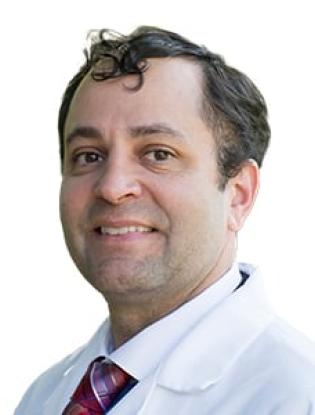
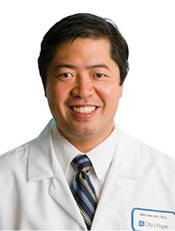
An expert in advanced neuroimaging techniques, Neal Prakash, M.D., Ph.D., is City of Hope’s chief of the Division of Neurology and director of neuro-optical imaging. Dr. Prakash leads programs for and treats patients with chemotherapy-induced neuropathy, headaches and chemobrain. He is heading a program to analyze and treat the long-term neurological effects of cancer patients who also recovered from COVID-19. Educated at University of California Berkeley and University of California Irvine, Dr. Prakash practiced in Hawaii before arriving at City of Hope in 2011. He regularly appears on a variety of “Top Doctor” lists and was named one of the “Leading Health Professionals in the World for Neurology and Neurosciences.” Dr. Prakash is a past president of the Society for Brain Mapping and Therapeutics. He publishes frequently and has helped create video animations to illustrate the workings of the brain.
Jean-Jacques Lemaire
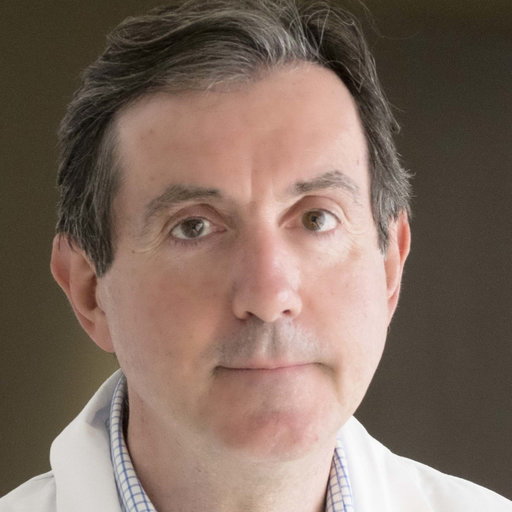
Jean-Jacques Lemaire (MD, PhD) is full professor of neurosurgery at the Université Clermont Auvergne (EPE UCA). His research focuses on image guided neurosurgery and connectomics from methodological approaches to clinical research; in this context he stayed in USA laboratories at Harvard Medical School and UCLA. He heads the service of neurosurgery at the University Hospital of Clermont-Ferrand, and the research axe of Image Guided Therapy (Pascal Institute; UMR UCA CNRS SIGMA). He has authored and co-authored more than 120 scientific papers, 200 communications in congresses, and was invited to more than 100 scientific meetings. He participates to two master program in medical engineering in France.
Farzad Massoudi
Warren Grundfest
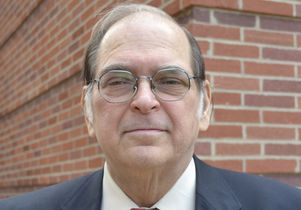
Heavily involved in SPIE conferences as a chair, committee member, and presenter since the early 90s, Grundfest was active in the earliest iterations of SPIE BiOS and, along with SPIE Fellow Abraham Katzir, was that symposium’s founding chair. Grundfest was appointed an SPIE Fellow in 1996. “The death of Warren Grundfest is a great loss to the biomedical optics community,” said Katzir, a professor of physics at Tel Aviv University. “Warren assisted me in establishing the SPIE conferences on optics in biology and medicine more than 30 years ago. Using his wide network of researcher and physicians, he paved the road to vibrant conferences. The current success of the SPIE BiOS meetings is largely due to his vision.” Grundfest was a surgeon as well as a pioneer in minimally invasive surgery, using X-ray, ultrasound, optical, and magnetic resonance imaging techniques. With his team at UCLA, his most recent work was investigating opportunities to further reduce invasiveness of cardiovascular, ophthalmologic, orthopedic, urological, and neurosurgical surgeries by utilizing terahertz imaging, laser-based destruction of bacteria, MRI-Ultrasound image fusion combined with targeted laser ablation, and advanced optical diagnostics. As well as being a founding chair of SPIE BiOS, Grundfest served as chair from 1998 through 2003, and was a member of the symposium’s planning committee in 2004. In addition, he had been a chair of the Advanced Biomedical and Clinical Diagnostic and Surgical Guidance Systems (ABCDSGS) conference – part of BiOS – since 1998. He published nine papers in SPIE’s Journal of Biomedical Optics, and authored over 100 papers in SPIE Conference Proceedings. “Warren was passionate about translating light-based technologies to clinical practice,” said Anita Mahadevan-Jansen who, alongside Grundfest and Tuan Vo-Dinh co-chaired the Advanced Biomedical and Clinical Diagnostic and Surgical Guidance Systems conference. “He believed in biophotonics and what it could do for the practice of medicine and surgery, and served our community in every aspect possible. Despite his deteriorating health, if he could physically make it, he attended Photonics West each year and chaired sessions. More importantly, he sought to engage the speakers, encouraging them to think about the clinical aspects of their research. He routinely served as a grant reviewer and was that rare panel chair who read every proposal under review. For me personally, Warren was an inspiration and a mentor, helping me navigate through the tricky pathways of commercial and clinical translation. He provided insight into how industry, as well as how clinicians, think; his advice has been critical to the success of my own research.” Grundfest received his BA from Swarthmore College in 1974, and his MD from Columbia University in 1980. He completed his General Surgery Residency at UCLA, 1980-82, and was Cedar-Sinai Medical Center’s General Surgery Chief Resident from 1982-85. A Fellow of the American College of Surgeons, American Institute of Medical and Biological engineering, the American Society for Laser Medicine and Surgery, and International Society for Endovascular Surgery, in 2012, Grundfest was appointed to the FDA Science Advisory Board. There, he served on the Subcommittee for the Center for Devices & Radiological Health, which provides scientific advice to the FDA director, and reviews regulatory science issues as well as programs of the FDA. As part of BiOS at Photonics West, Grundfest initiated and led special FDA-focused sessions during which SPIE hosted a panel of FDA staffers sharing their advice and knowledge with conference attendees. In 2014, he was selected by the American Institute for Medical and Biological Engineering (AIMBE) as the recipient of the institute’s highest honor, the Pierre Galletti Award, in recognition of Grundfest’s “seminal contributions as a surgeon, inventor, and educator. Through activities with AIMBE, TATRC [the US Army’s Telemedicine and Advanced Technology Research Center], NIH, FDA, SPIE, IEEE, OSA, and other medical societies, he has promoted the critical role of medical and biological engineering in healthcare advances.”
Ferenc A. Jolesz
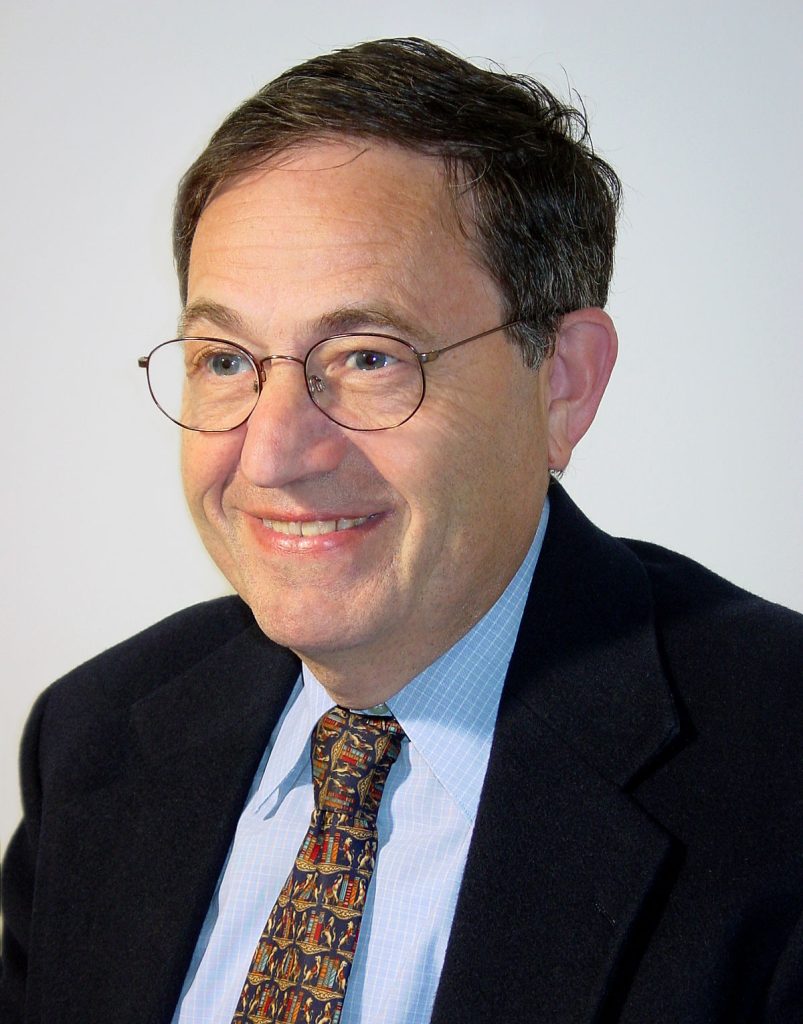
Jolesz became director of the Division of Magnetic Resonance Imaging at The Brigham and Women’s Hospital in 1988, and in 1989, associate professor of radiology at Harvard Medical School. In 1993, he established the Image-Guided Therapy Program at The Brigham and Women’s Hospital to advance the use of imaging for enhancing minimally invasive surgical procedures and other means of therapy delivery. The program includes the Surgical Planning Laboratory, the Focused Ultrasound Surgery Laboratory, and intraoperative imaging suites. In 1998, Jolesz was appointed the first incumbent B. Leonard Holman Chair in Radiology at Harvard Medical School, and in 2000, was appointed Vice Chair for Research for the Department of Radiology at The Brigham and Women’s Hospital. In 2001, he was named director of the Advanced Imaging Center of Harvard Medical School’s NeuroDiscovery Center. The broad focus of Jolesz’s research was the integration of imaging technologies into a variety of medical disciplines beyond the traditional role of Radiology. He drew from the areas of basic and clinical neuroscience, imaging physics, MRI, three-dimensional medical visualization, robotics, computer vision, and therapy delivery technologies to pioneer a wide variety of clinical techniques in image-guided therapy. He cultivated basic research in each of these areas and integrated the results with the goal of augmenting the physician’s ability to deliver treatment to his or her patient. Where they did not previously exist, Jolesz spearheaded the development and implementation of highly novel approaches to image processing and analysis, visualization, and navigation techniques for improving the diagnosis and treatment of neurologic and oncologic diseases. He then combined the most promising results into research clinical systems where new procedures could be developed, evaluated and refined. Jolesz initiated and led an academic industrial partnership of clinical and technical colleagues in designing and developing the first magnetic resonance image-guided unit for image-guided brain tumor resection that was installed at The Brigham and Women’s Hospital in 1993. The team, consisting of members of the departments of Radiology and Otorhinolaryngology and the neurosurgical service at BWH and industrial collaborators from General Electric Medical Systems, developed and built an entire operating suite built around a specially-designed 0.5 Tesla MRI scanner that allowed ongoing patient scans to be obtained during a surgical procedure. Information from the scans, including imaging data registered with three-dimensional models created from pre-operative imaging, was available to the surgical team to help guide the procedure.[4] The system became known as MRT (for Magnetic Resonance Therapy) at BWH and commercialized by GE Medical Systems as the GE Signa SP.
Babak Kateb
Babak Kateb, MD, Ph.D. (h.c.), is a neuroscientist and serial neurotech entrepreneur with more than 22 years of research experience. His research has focused on introducing advanced diagnostics and therapeutics into clinical neuroscience to rapidly identify and introduce game-changing technologies to treat neurological disorders such as brain cancer, Alzheimer’s disease, Parkinson’s disease, and other brain and spinal conditions. He did his educational training at TUSOM, USC. His research fellowship was at the USC-keck School of Medicine, Department of Neurosurgery. He also studied VLSI system design at the USC Department of Electrical Engineering at the Ming Hsieh Institute; he has an Honorary Ph.D. from Uskudar University, Istanbul, Turkey. Babak established the Society for Brain Mapping and Therapeutics (SBMT) while doing his research fellowship 22 years ago at USC. He is the founding Chairman of the board of directors & CEO of the Society for Brain Mapping and Therapeutics (SBMT). He is the President and Scientific Director of the World Brain Mapping Foundation, the National Center for Nano-Bio-Electronics, and the Brain Technology and Innovation Park (BTIP), focused on integrating nanotechnology, cellular therapeutics/stem cell, medical devices, and imaging. He is a member of the advisory board of AiM Med Robotics and Chairman of the science advisory board of Infinity Arc (cancer/radiosurgery tech). Babak was the Director of Research and Development in the Department of Neurosurgery at the City of Hope Comprehensive Cancer Center. He established collaboration with NASA and published and pioneered the technique for using NASA multiwall carbon nanotubes to activate macrophages for brain cancer immunotherapy. While at the City of Hope, he received NASA Tech Brief Award for his pioneering work on sniffing cancer cells using NASA’s electronic nose. In 2010, he joined the Department of Neurosurgery at Cedars Sinai Medical Center as a research scientist. He developed a partnership between Cedars-Sinai and NASA and established a clinical trial using NASA UV imaging for intraoperative brain mapping. He also patented technology to microwave brain cancer, which the FDA approved for soft tissue; the technology also could be used for brain, liver, head and neck, prostate, and breast cancer. He was also Scientific Director and a Chief Strategy Officer (CSO) at California Neurosurgical Institute from 2015-2017, where he co-authored a nano-neurosurgery paper in Nature-Scientific Reports. He has been recognized by then Vice President Biden, the Mayor of Los Angeles, and the Governor of California for his dedication to science. In 2015, the Society for Brain Mapping and Therapeutics and World Brain Mapping Foundation Board of Directors presented him with Pioneer in Medicine award. He is collaborating with Los Alamos National Lab (LANL) and had a dual appointment with NASA/JPL as a visiting scientist. His research at NASA and LANL involves the use of Artificial Intelligence (AI), Augmented Reality (AR), Virtual Reality (VR), and supercomputing for brain mapping and therapeutics, using LANL’s advanced ultrasonic technology for brain stimulation. Babak holds patents in these areas. He has established a new publication with PLoSOne, which is called PLoSOne_ NeuroMapping & Therapeutics. He served as editor-in-chief and was the force behind three successful NeuroImage-Brain Mapping and Therapeutics special issues. He is the editor of the inaugural Textbook of Nanoneuroscience and Nanoneurosurgery, published by Taylor & Francis (2013), and the editor of the inaugural Neurophotonic and Brain Mapping (2017). Babak has been deeply involved in international neuroscience legislation through his close collaboration with the US Congressional Neuroscience Caucus and members of the Canadian Parliament. He chaired 9 Congressional briefings: Brain Mapping Days (2012-2023) at the United States Congress on Brain Mapping; one Brain Research Day at the Canadian Parliament in 2013, and one Brain Mapping Day at the joint sessions of the Australian Senate and Parliament in 2015. His initiatives have impacted the health care delivery to wounded soldiers in the US. He has been one of the key players in President Obama’s BRAIN initiative and co-author of the Neuroscience20 Brain, Spine and Mental Health and African Brain Mapping Initiative. He has founded and Co-chaired ten G20 Brain Initiative Summits (Neuroscience20/N20) since the 2014 inaugural meeting in Australia.