
George Perry, PhD
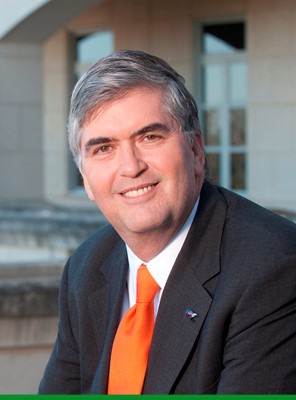
Professor of biology and chemistry at the University of Texas at San Antonio and the former dean of the College of Sciences. Editor-in-Chief of the Journal in Alzheimer’s Disease Co-Chair of SBMT Alzheimer’s Subcommittee. Research Interests Dr. Perry’s studies are focused on the mechanism of formation and physiological consequences of the cytopathology of Alzheimer disease. The lab has shown that oxidative damage is the initial cytopathology in Alzheimer disease. They are working to determine the sequence of events leading to neuronal oxidative damage and the source of the increased oxygen radicals. Current studies focus on the:
Robert W. Thatcher
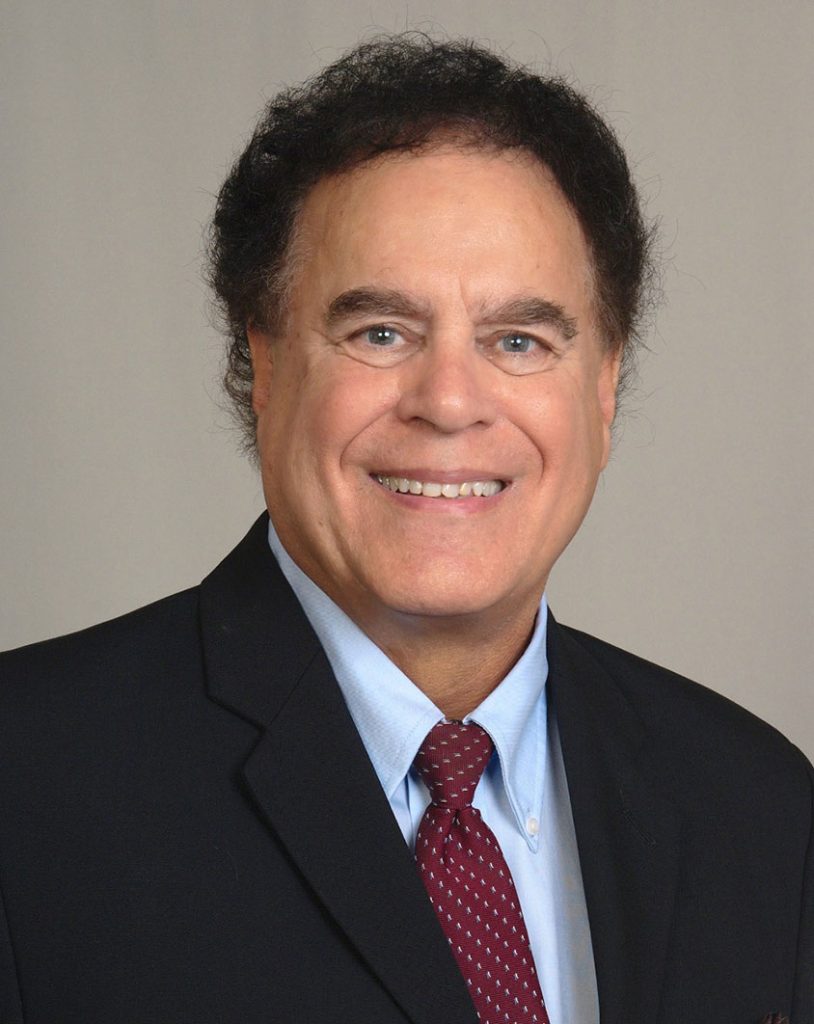
Robert W. Thatcher, Ph.D. received a bachelor’s degree in chemistry from the University of Oregon and a Ph.D. degree in Psychology/Biopsychology from the University of Waterloo before completing postdoctoral fellowships in Neurobiology and Neurophysiology at Albert Einstein College of Medicine and New York Medical College. In 1973 Dr. Thatcher was appointed as Assistant Professor of Psychiatry at New York Medical College and in 1977 as an Associate Professor of Psychiatry at New York University School of Medicine. In 1979 Dr. Thatcher was appointed as a professor of Psychiatry and Director of the QEEG service at Shock Trauma, University of Maryland before joining the National Institutes of Health in 1991 as the Program Manager for the integration of 128 channel EEG with MRI, PET and SPECT. Dr. Thatcher was the director of the NeuroImaging Laboratory at the Bay Pines VA Medical Center, Bay Pines, FL from 1993 to May 2006. As the principal investigator for the Department of Defense Head Injury Program (DVHIP) Dr. Thatcher over saw the collection and analysis of quantitative EEG from over 1,500 head injured patients which also involved the integration of EEG with MRI. Dr. Thatcher’s professional affiliations include being a board member of the American Board of Electroencephalography and Clinical Neurophysiology, a National Institute of Health Scientific advisory board member for the Human Brain Project, an executive board member of the EEG and Clinical Neuroscience Society and was a board member of the International Society for Neurofeedback. He is involved in collaborative research with several major medical centers as well as ongoing clinical applications of qEEG and EEG biofeedback as part of the Resilience Program of the US Army at Fort Campbell. He is currently on the Board of Directors for the Society for Human Brain Mapping and Therapeutics (SBMT) and is the chair for the MEG/EEG track of the SBMT). He has been the recipient of the Hans Berger Award of Merit (AAPB Neurofeedback Division) and the Life Time Achievement Award for work in the scientific specialty of QEEG (ISNR) and The Pioneer in Medicine award by the Society for Human Brain Mapping and Therapeutics (2020). He is currently the Founder and CEO of Applied Neuroscience, Inc. and the Director of Applied Neuroscience Research Institute, St. Petersburg, Florida. Dr. Thatcher is certified as an expert in both conventional electroencephalography and quantitative electroencephalography (QEEG), has read over 20,000 EEGs, and has written or supervised the writing of over 10,000 clinical EEG cases. He has extensive mathematical and programming experience as well as organizational leadership skills. He is the author of over 200 publications, including eight books. His most recent books are Thatcher, R.W. and Lubar, J.F. (Editors (2014) “Z Score Neurofeedback: Clinical Applications” and the “Handbook of Quantitative Electroencephalography and EEG Biofeedback, 2nd Edition.
Roger W. Werne
ROGER WERNE is a Senior Advisor for the Innovation and Partnerships Office (IPO). Dr. Werne has broad experience in the commercialization of technology developed within the Lawrence Livermore National Laboratory (LLNL). He launched and led the laboratory’s Industrial Partnering program in the late 1980’s while an Associate Director for Engineering. In 1995, he left LLNL and co-founded ITI Medical Technologies, a medical device company that developed unique surgical instruments for the field of Magnetic Resonance Image (MRI) guided surgery, a new minimally invasive surgical paradigm. The company patented, developed, and had FDA approval of a unique line of electrosurgical instruments which are still available in the medical marketplace. Roger returned to LLNL in 1999 as Chief Engineer for the NAI/Homeland Security Directorate tasked with countering the proliferation and use of weapons of mass destruction (WMD) against the United States. From 1999 to 2005, Dr. Werne was on the external Division Review Committee for the Engineering Sciences and Application Division at Los Alamos National Laboratory. In 2007, he joined the Innovation and Partnerships Office as Deputy Director, overseeing the licensing of laboratory developed intellectual property to the private sector and Cooperative Research and Development Agreements (CRADAs) with industry. He is a member of the Keiretsu forum, Angel Investment group, the Scientific Advisory Committee for the Society for Brain Mapping and Therapeutics, and the Innovation Advisory Committee at San Jose State University. Dr. Werne received his Ph.D. in Structures and Solid Mechanics from the University of California at Berkeley.
Ashraf Mounir Elsayegh
Dr. Elsayegh graduated from the Ross University School of Medicine in 1998. He works in Los Angeles, CA and 3 other locations and specializes in Critical Care Medicine, Critical Care Respiratory Therapy, Pulmonology and Sleep Medicine.
Seung-Schik Yoo
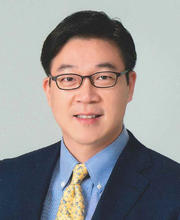
Seung-Schik is an associate professor of Radiology at Harvard Medical School, and is a director of Neuromodulation and Tissue Engineering Laboratory (NTEL), Brigham and Women’s Hospital. He also serves as a faculty member of Mind Brain Behavior at Harvard University. He has done early pioneering works in developing real-time functional magnetic resonance imaging that are used to interpret the human mind, and applied the technology to interface the brain function with machines and computers. Later, he developed a new mode of non-invasive brain stimulation modality which utilizes the focused ultrasound waves to control regional neural functions, including the activity of the brain. He is primarily interested in advancing the technique for various neurotherapeutics, but also likes to seek out new ways to link thought/brain processes between individuals. Seung-Schik also developed a three-dimensional bioprinter that can ‘print out’ artificial brain tissues and organoids for potential applications in neural computers and medical applications.
Keyne Johnson
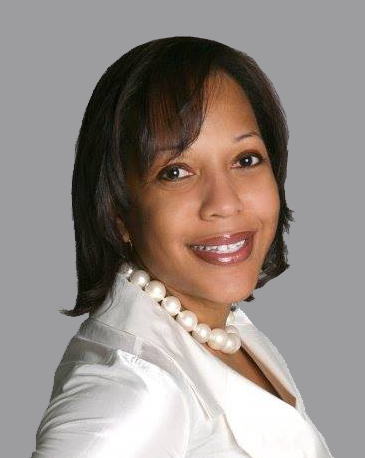
Dr. Johnson is a board certified pediatric neurosurgeon who received her training in neurosurgery at Duke University Medical Center in Durham, NC. She completed further training with a pediatric neurosurgery fellowship at Texas Children’s Hospital in Houston, TX. Since then, she has developed an outstanding expertise in epilepsy, brain tumor removal, complex spine surgery, minimally invasive spine and brain surgery as well as endoscopy. Since 2008, Dr. Johnson has been based in Orlando, bringing a host of novel techniques to Central Florida. She has treated a myriad of diseases including cervical spine instability, scoliosis and Moya Moya disease. She is a fellow of the American Association of Neurological Surgeons and Assistant Professor at the University of Central Florida School of Medicine. Dr. Johnson has presented her research at numerous national meetings, is published in numerous peer-reviewed journals and has trained internationally. She feels her greatest, most cherished accomplishments are her two sons, Carson and Harrison.
John S. Yu
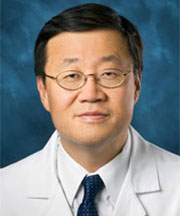
Dr. John S. Yu is a member of the full-time faculty in the Department of Neurosurgery at Cedars-Sinai Medical Center as well as the founder of ImmunoCellular Therapeutics. An internationally renowned neurosurgeon, Dr. Yu’s clinical focus is on the treatment of malignant and benign brain and spinal tumors. In addition, he is conducting in-depth research in immune and gene therapy for brain tumors. He has also extensively studied the use of neural stem cells as delivery vehicles for brain cancers and neurodegenerative diseases. Dr. Yu was inducted into Castle and Connelly’s America’s Top Doctors in 2005 and has published articles in a number of prestigious journals, including The Lancet, Cancer Research, Cancer Gene Therapy, Human Gene Therapy, Journal of Neuroimmunology, Journal of Neurological Science and Journal of Neurosurgery. Dr. Yu earned his bachelor’s degree in French literature and biological sciences from Stanford University and spent a year at the Sorbonne in Paris studying French literature while pursuing a fellowship in immunology at the Institut Pasteur in Paris. He earned his medical degree from Harvard Medical School and master’s degree from the Harvard University’s Department of Genetics. He completed his neurosurgical residency at Massachusetts General Hospital (MGH) in Boston. In addition, he was a Neuroscience Fellow at the National Institutes of Mental Health in the Neuroimmunology Unit at MGH from 1988 to 1989 and was a Culpepper Scholar in the hospital’s Molecular Neurogenetics Unit from 1993 to 1995. Dr. Yu’s other honors include the Preuss Award, Joint Section on Tumors, American Association of Neurological Surgeons and Congress of Neurologic Surgeons in 1995. He received the Academy Award from the American Academy of Neurological Surgery at its 1996 annual meeting. Other honors include the Young Investigator Award from the Congress of Neurological Surgeons in 2000, the National Brain Tumor Foundation Grant in 2001, and the Mahaley Clinical Research award from the American Association of Neurological Surgeons in 2005.
Katrin Amunts
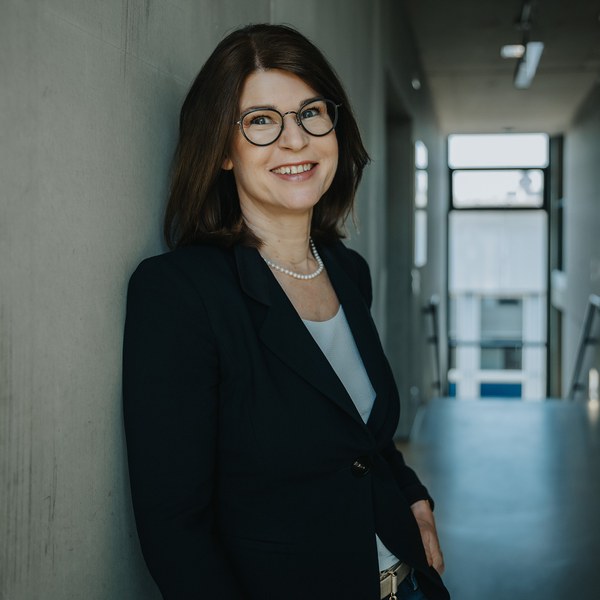
Prof. Dr. med. Katrin Amunts did a postdoctoral fellowship at the C. & O. Vogt Institute of Brain Research at Duesseldorf University, Germany. In 1999, she set up a new research unit for Brain Mapping at the Research Center Juelich, Germany. In 2004, she became professor for Structural-Functional Brain Mapping, and in 2008 full professor at the Department of Psychiatry, Psychotherapy and Psychosomatics at the RWTH Aachen University as well as director of the Institute of Neuroscience and Medicine (INM-1) at the Research Center Juelich. Since 2013, she accepted an offer to a full professor for Brain Research and director of the C. and O. Vogt Institute of Brain Research, University Hospital, Heinrich-Heine University Duesseldorf. Since 2016, Katrin Amunts is Scientific Research Director and Chair of the Science and Infrastructure Board (SIB) of the Human Brain Project (HBP), a European Flagship Project. She is active part of the International Brain Initiative, and a member of the several international boards. Since 2017 Katrin Amunts is co-speaker of the graduate school Max-Planck School of Cognition. Katrin Amunts is member of the German Ethics Council since 2012, and has been elected as vice chair in 2016. In order to better understand the organizational principles of the human brain, she and her team are developing a multi-level and multi-scale atlas of the human brain, and use methods of high-performance computing to generate ultra-high resolution human brain models such as the BigBrain.
Vasileios K. Katsaros
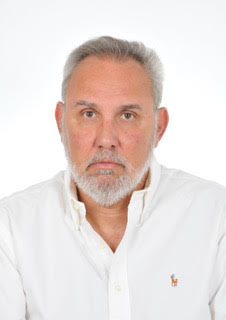
Senior Consultant Radiologist – Neuroradiologist, Director in the MRI Department of the General Anti-Cancer and Oncological Hospital of Athens “Agios Savvas” and Clinical Research Affiliate in the Departments of Neurosurgery and Neurology of the National and Kapodistrian University of Athens, Greece. He is also Clinical and Research Affiliate in the Departments of Neuroradiology, University Clinic of Τübingen (UKT), Germany and University College of London (UCL), UK. He completed his Neuroradiology fellowship in Albert-Ludwigs University in Freiburg, Germany in 1995. He has more than 30 years’ experience in clinical imaging of brain diseases, with a special focus on advanced MRI of brain tumors (more than 1500 cases performed) and the integration of the multi-modal MRI and fMRI (task-based, as well as Resting-State)-DTI brain mapping (gross-total excisions), Perfusion DSC-T2*-MRI and Spectroscopy (guiding targeted biopsies) in neuronavigational systems for imaging-guided neurosurgery and participates (together with the 1st Department of Neurosurgery of the University of Athens, Prof. G. Stranjalis and Imagilys, Brussels, Belgium using BrainMagix (CE marked) post-processing software platform) in the International DTI Challenge Project for Neurosurgical Planning (Brigham and Women’s Hospital, Harvard Medical School, MA, USA). He is also co-founder of the Hellenic Neuro-Oncological Group (HENOG-2015-http://neurooncology.gr), Medical Advisor and Consultant at IQBMI (www.iqbmi.com-2020), and National Representative as well as principal member of the Management Committee in COST GliMR2.0 Action of European Union (CA 18206 – September 2019 till September 2023). He holds the European Qualification in Neuroradiology (EQNR), as senior neuroradiologist, endorsed by the European Society of Neuroradiology since 2007 and is a full member of European Society of Radiology (ESR-1995), Radiological Society of North America (RSNA-2000), European Society of Neuroradiology (ESNR-2006), the American Society of Functional Neuroradiology (ASFNR-2013), the International Society of RadioSurgery (ISRS-2020), the Society for Brain Mapping and Therapeutics (SBMT-2020) and Brain Mapping Foundation (BMF-2020).
Jonathan Sackier
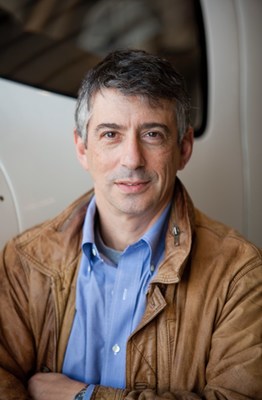
Dr. Sackier is a medical robotics maverick who played a key role in developing AESOP (Automated Endoscopic System for Optimal Positioning), which received FDA clearance in 1994 and became the first robot to assist in minimally invasive surgery. He contributed to AESOP’s design with a focus on clinical user interface, as well as trials and launch, and performed the first procedures with the system. In 2003, the company behind AESOP, Computer Motion, merged with Intuitive Surgical (ISRG) and developed the Da Vinci Surgical System. Dr. Sackier helped lead the minimally invasive surgery revolution, and as a Professor at George Washington University in Washington, DC he both founded and helped fund the Washington Institute of Surgical Endoscopy (WISE). He has advised and collaborated with leading family office-owned and publicly-listed multi-national companies including Cook Medical, Karl Storz, Applied Medical, Pall Medical, Merck, Novartis, and Pfizer, and served on the Board of the American College of Surgeons Foundation, the Larry King Cardiac Foundation, Adenosine Therapeutics, and Hemoshear.