
John Klemack
Brian Norling
Kenneth P. Green
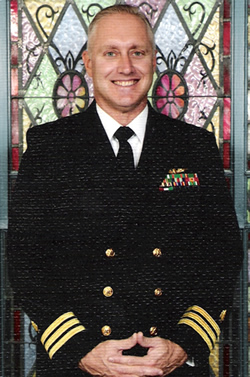
Kenneth P. Green, D.M.D., B.S., Dr. Green primarily is a Commander in the United States Navy serving as the Assistant Department Head of the Faculty Practice at the Naval Postgraduate Dental School located at the Walter Reed National Military Medical Center. He will soon be completing a career on August 1st that has spanned 32 years in uniform. In his undergraduate studies he became the first graduate to receive a degree in bioengineering at Syracuse University. Receiving his DMD from Boston University’s Goldman School of Graduate Dentistry, he then spent a year as a resident in the department of anesthesiology at the Boston City Hospital. After running a dental residency program in Brooklyn, NY, and in private practice in New York City, he became a Dental Officer in the Navy Reserves. Following a lifelong dream to try to reach NASA, Dr. Green switched careers and came on active duty to become a Navy Aerospace Physiologist. He served in that role and as an Aeromedical Safety Officer for more than 10 years, both training Naval Aviators and investigating human factor roles in Naval aircraft mishaps. He served with Navy and Marine Corps squadrons, in the continental US, at sea and deployed with the Marines during Operations Desert Shield and Storm. After a brief return to private practice and the Navy Reserves, Dr. Green returned to active duty, once again as a dental officer. After a tour at the Naval Hospital Jacksonville, Dr. Green took a position working at the headquarters for Navy Medicine. There he worked in several roles most recently in the Navy Surgeon General’s department which oversaw all of medical research in the Navy. During that time he experienced life as a critically ill neurosurgical patient which fortuitously led him, while lecturing on his area of expertise, team communication and mishap prevention, to a professional encounter with Dr. Kateb. This in turn led to his association with SBMT, his role expanding from an attendee at the annual meeting, to the leadership role he now has within the SBMT organization.
Bryan Aroz
Joe F. Bolanos
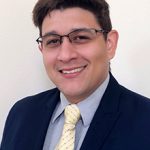
A Passion for Innovation in Healthcare Dr. Joe F. Bolanos, embodies a compelling fusion of medical expertise and technological acumen. With an unwavering interest in harnessing innovation to improve healthcare efficiency, and a commitment to improving patient access to novel diagnostics and therapies. Dr. Bolanos has carved a distinguished path throughout his career. He earned his Doctor of Medicine from Universidad Dr. José Matías Delgado in El Salvador. Early Promise and First Steps in Medicine: A lifelong fascination with technology and its potential to revolutionize healthcare propelled Dr. Bolanos towards a medical career. During his medical school tenure, his dedication was recognized through a three-year scholarship for academic excellence, solidifying the respect of his peers, professors, and patients alike. His initial foray into the world of neuroscience occurred upon completing his medical training, when he served as attending physician for orphaned individuals with neurodevelopmental disorders. Emigrating to the US and Embracing Research: Following his medical school graduation, Dr. Bolanos immigrated to the United States, where he actively participated in diverse healthcare projects. A particularly impactful undertaking involved establishing the Metro Health Station Clinic in South Central Los Angeles, aimed at alleviating the healthcare deserts plaguing the underserved community in Jefferson Park. Dr. Bolanos actively participated in addressing healthcare disparities. In this role, he played a pivotal leadership role, overseeing care logistics, patient organization, and medical area coordination. This experience ignited his research curiosity, leading him to explore novel methods for aiding both local patients and individuals who could benefit from advancements in medical technologies and pharmaceuticals. Early Research Journey and Transitioning to SBMT: Dr. Bolanos embarked on his research journey in the field of dermatology, successfully managing clinical trials for conditions ranging from tinea to diabetes to psoriasis, partnering with esteemed laboratories like Bristol-Myers Squibb, Asana, Pfizer, Leo Pharma, and Biome. He then joined the Society for Brain Mapping and Therapeutics (SBMT) as a Research Fellow. Dr. Bolanos’s commitment to leadership and research excellence is further exemplified by his contributions at the SBMT. He commenced his tenure there as a Research Fellow. His exceptional abilities were quickly recognized, leading him to assume the leadership role among the fellows and subsequently being promoted to Lead Research Fellow in just six months. Leadership During the Pandemic and Beyond: During the COVID-19 pandemic, Dr. Bolanos refused to remain idle. He assembled a team that, under the guidance of Dr. Babak Kateb, authored the impactful paper “COVID-19: A Review of a 21st Century Pandemic, from Etiology to Neuropsychiatric Implications.” This achievement earned him the coveted Student Service and Leadership Award (WBMF Awards) and a subsequent promotion to Research Scientist. Additionally, his research explored the neurological burden of these diseases, culminating in the proposal of the “Neuroscience20 (BRAIN20, SPINE20, and MENTAL20) Health Initiative: A Global Consortium Addressing the Human and Economic Burden of Brain, Spine, and Mental Disorders Through Neurotech Innovations and Policies” in collaboration with SBMT. Dr. Bolanos’s leadership talents were further recognized when he was entrusted with leading SBMT subcommittees. He spearheaded the research and writing efforts that led to the publication of “A Proposed Brain-, Spine-, and Mental-Health Screening Methodology (NEUROSCREEN) for Healthcare Systems: Position of the Society for Brain Mapping and Therapeutics.” He has also authored numerous book chapters on topics ranging from clinical medicine to neurotechnology and FDA regulations. Notably, he is slated to contribute to the upcoming Neurophotonics book under the mentorship of Dr. Babak Kateb. While at SBMT, he concurrently served as an Adjunct Clinical Professor in Urology at the University of Southern California, collaborating with Vasgene Therapeutics on research pertaining to prostate and bladder cancers. Returning to SBMT and Shaping the Future: In 2022, Dr. Bolanos returned to SBMT brimming with ideas to streamline processes. With Dr. Kateb’s support, he embarked on a comprehensive overhaul of the organization’s framework, processes, and systems. Dr. Bolanos’s dedication to the advancement of the field is further evidenced by his participation in the 7th, 9th, and 10th Neuroscience20 Initiative Summits in Saudi Arabia, Bali, Indonesia, and New Delhi, India. These contributions were recognized by the SBMT with the prestigious Global Leadership Award in 2023. A Vision for the Future: Leveraging his aptitude for streamlining processes and improving systems, Dr. Bolanos was promoted to Chief Operating Officer of SBMT in 2022. Under his leadership, the organization underwent significant improvements, including enhanced systems, streamlined processes, and a revitalized corporate image. His dedication was further acknowledged with the Golden Axon Leadership Award at the GFC Awards Gala in 2024, followed by a well-deserved promotion to the SBMT Advisory Board. His unique blend of medical expertise and technological foresight positions him as a driving force for positive change within the healthcare landscape.
Kevin Morris, MBBS
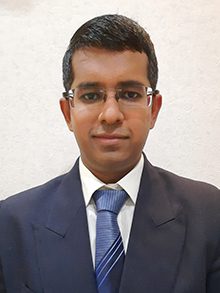
Deborah Zelinsky
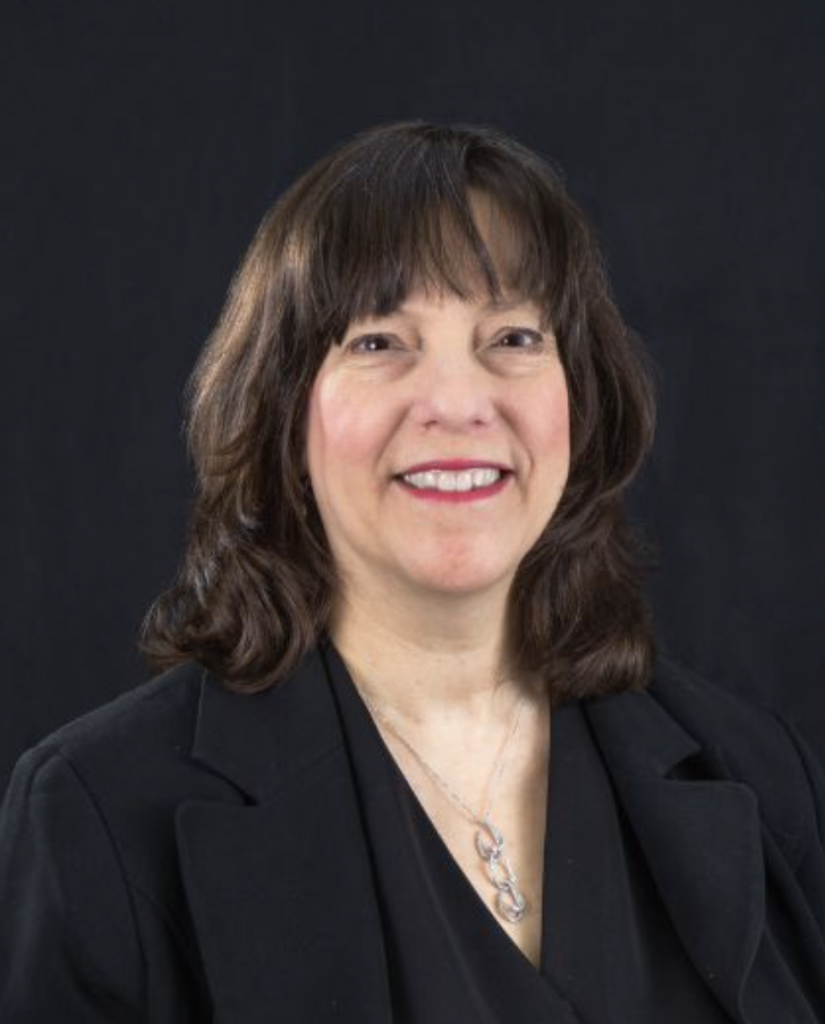
Her global reputation is due, in part, to her discovery of the use of eyeglasses to alter sound location and subsequent development of the Z-Bell Test℠. The patented test allows Dr. Zelinsky and her team to prescribe lenses and use other optometric interventions that balance processing of central and peripheral eyesight, while synchronizing the integration between auditory and retinal sensory systems. The Mind-Eye Institute was created with the objective to make new science discoveries pertaining to eyes more accessible to patients both domestically and globally. Dr. Zelinsky’s vision is to train other eyecare professionals on enhancement of retinal processing using her patented methods, with a short-term goal to have accredited doctors practicing in most major population centers globally. The 20/20 eye testing standard is over 150 years old and does not consider the peripheral processing or auditory integration both of which are critical. Dr. Zelinsky is pioneering a campaign to “Leave 20/20 in the 20th Century” and shift into a more updated assessment protocol including moving targets and overall awareness of surroundings. Using brain mapping of the retina (which is comprised of brain tissue) the optometric profession can perform brain, rather than eye, examinations. Patients needing this updated testing include those who have been diagnosed with a brain that isn’t functioning at its full potential. This includes a wide range of issues, including genetic mutations, autism, attention problems such as ADD and ADHD, dyslexia, learning problems, concussions, and stroke among others. In addition to her work with the Mind-Eye Institute, Dr. Zelinsky is a fellow in both the College of Optometrists in Vision Development and the Neuro-Optometric Rehabilitation Association. She is a board member of the Society for Brain Mapping and a community leader for the Society of Neuroscience. More on Deborah Zelinsky: Here
Vicky Yamamoto
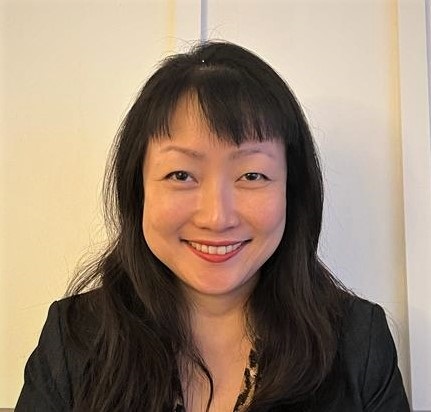
Dr. Yamamoto’s pioneering work on mammalian Ryk was conducted at the laboratory of Professor David Baltimore, a Nobel laureate-1975, at California Institute of Technology. In this project, Drs. Baltimore, Yamamoto and the team have demonstrated that a Wnt co-receptor is required for stimulation of neurite outgrowth. The significant finding was published in a prestigious journal, Cell (Cell Press). This work opened new possibilities for scientists to investigate the role of Wnt signaling in cellular growth and differentiation in the central nervous system. Dr. Yamamoto received a prestigious fellowship from California Institute for Regenerative Medicine (CIRM) to investigate the role of cleavage of Wnt co-receptor Ryk in regulating neuronal differentiation during cortical neurogenesis. She published her results in Developmental Cell (Cell Press), which identified a key mechanism that regulates the development of stem cells into neurons. Dr. Yamamoto’s current research at Keck School of Medicine of USC in the Department of Head and Neck Surgery focused on a) The effect of Wnt small molecule inhibitor in enhancing chemo-radiation sensitivity of cancer cells. b) Investigating the roles of cancer stem cells in head and neck cancer progression and metastasis. c) IL-6/STAT3 signaling as a therapeutic target and for early diagnosis. She has been a recipient of many prestigious awards including: an industry award, the young investigator award from Society for Brain Mapping & Therapeutics (SBMT), a pre-doctoral fellowship from The Edwin Everest Foundation, CIRM pre-doctoral fellowship from California Institute for Regenerative Medicine, as well as numerous awards from Mount St. Mary’s College including President’s Medal, Sister Rebecca Doan’s award, community service award, and the honors certificate. She graduated with Magna Cum Laude from Mount St. Mary’s College with a BS in biological sciences and a BA in chemistry. She received a PhD in biochemistry and molecular biology from Keck School of Medicine of USC. Dr. Yamamoto has been a founding member of the board of the Society for Brain Mapping and Therapeutics (SBMT). She has served on many committees including publication committee as a member of the editorial board and co-chaired the industry committee of SBMT where she provided a liaison with near 3,000 industry partners of the society. Dr. Yamamoto is also an active board member of the Brain Mapping Foundation.
Jason Cormier
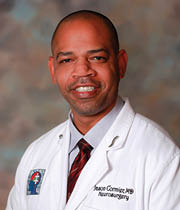
Dr. Cormier is a native of South Louisiana, where he graduated from St Thomas More High School in Lafayette, La. A former LSU basketball player and graduate of Louisiana State University in Baton Rouge, he went on to receive his medical degree from Louisiana State University in New Orleans, Louisiana. He became eligible for the Alpha Omega Alpha Medical Honor society and served on several committees, including the LSU School of Medicine Admissions Committee, the LSU School of Medicine Dean’s Selection Committee and was the medical school’s representative to the Louisiana Board of Supervisors in 2004. He received a number of scholarships and was a member of many different societies. Dr. Cormier also dedicated his time on a monthly basis to the Student Run Homeless clinic in New Orleans, La. Dr. Cormier joined Acadiana Neurosurgery and its founder Dr. Alan Appley after his internship in general surgery and neurosurgery at Duke University Medical Center in Durham, NC and the completion of his training at the University of Alabama at Birmingham in Birmingham AL. During his training, he gained extensive experience in complex spinal surgery under the direction of Dr. Mark N. Hadley and associates. He also received special training in minimally invasive spinal surgery as well as open and endoscopic brain surgery. He has published articles in national journals involving the fields of Adult and Pediatric spine and epilepsy. In 2005 he served on the Council of State Neurological Society in 2005 as a representative of Alabama to the American Association of Neurological Surgeons. He received the Resident Leadership Award from the Division of Neurological Surgery at the University of Alabama at Birmingham for “his dedication to promoting the art and science of Neurosurgery, demonstrating outstanding clinical skills, offering leadership by word and example and providing mentorship to junior residents.” Dr. Cormier maintains his interests to train Neurosurgeons of tomorrow and will be teaching both medical students and residents many innovative neurosurgical techniques including endoscopic pituitary and image-guided surgery, and minimally invasive complex spinal surgery. Dr. Cormier was named as one of “America’s Top Surgeons,†in the field of Neurosurgery, by the Consumers Research Council of America, Guide to America’s top surgeons. Dr. Cormier is a member of the American Association of Neurological Surgeons and the Congress of Neurological Surgeons and is board eligible in neurological surgery. In his own words, “It’s great to be back home. I have been truly blessed. Dr. Cormier is one of Lafayette Surgical Specialty Hospital’s Physician Owners.
Robert Hariri
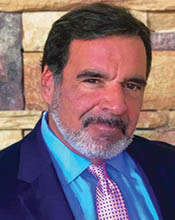
Dr. Hariri pioneered the use of stem cells to treat a range of life-threatening human diseases and continues today to make transformative contributions in the fields of immuno-oncology and cell therapeutics along with tissue engineering and functional regeneration. He is widely acknowledged for his discovery of pluripotent stem cells derived from the human placenta, and as a member of the team that discovered the physiological activities of tumor necrosis factor (TNF). Dr. Hariri and his team of scientists were the first to obtain FDA approval to use its cryopreserved allogeneic, off-the-shelf Natural Killer (NK) cell therapy to treat COVID-19 infected adults. He holds over 170 issued and pending patents for discoveries including placenta-derived stem cells, which Nature recognized as one of the ten most important patent estates in the field. He has authored over 150 published chapters, articles, and abstracts. Dr. Hariri was the recipient of the Pontifical Medal for Innovation awarded by Pope Francis in 2018 for his discovery of placental stem cells and advances in immunotherapy and regenerative medicine. Dr. Hariri twice received the Thomas Alva Edison Award for invention, in 2007 and 2011, and is a recipient of the Children’s Brain Tumor Foundation’s Fred J. Epstein Lifetime Achievement Award. Dr. Hariri was recipient of the Genius of New Jersey Award in 2019 and over the years has received numerous other honors for his many contributions to the fields of biomedicine and aviation. Dr. Hariri is an Adjunct Professor of Neurosurgery and member of the Board of Overseers of the Weill Cornell Medical College and a former member of the board of visitors of the Columbia University School of Engineering and Applied Sciences, and the Science & Technology Council of the College of Physicians and Surgeons. He is a member of the X PRIZE Foundation scientific advisory board for the Archon X PRIZE for Genomics. Dr. Hariri is a trustee and vice-chair of the Liberty Science Center. In 2010 he was appointed a Commissioner of Cancer Research by New Jersey Governor Chris Christie. Dr. Hariri completed his undergraduate training at Columbia University School of Engineering and Applied Sciences and Columbia College. He received his M.D. and Ph.D. degrees from Cornell University, where he was the recipient of both the Julian R. Rachele Award and the Doctoral Dissertation Award. He was a surgical resident and fellow in neurosurgery at The New York Hospital-Cornell Medical Center and served as an Assistant Professor of Neurosurgery and Associate Research Professor of Surgery at Cornell and Co-director of the Aitken Laboratory in Neurosurgery.