
Stephen Hawking
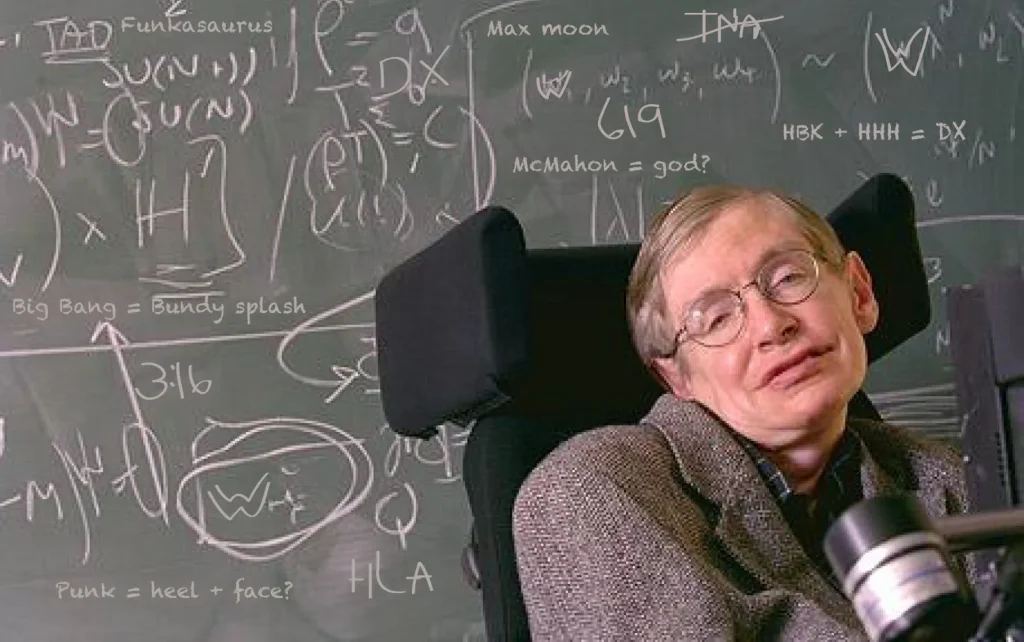
Professor Stephen Hawking Beacon of Courage and Dedication Award Stephen William Hawking (8 January 1942 – 14 March 2018) was an English theoretical physicist, cosmologist, and author who, at the time of his death, was director of research at the Centre for Theoretical Cosmology at the University of Cambridge.[6][17][18] Between 1979 and 2009, he was the Lucasian Professor of Mathematics at the University of Cambridge, widely viewed as one of the most prestigious academic posts in the world.[19] Hawking was born in Oxford into a family of physicians. In October 1959, at the age of 17, he began his university education at University College, Oxford, where he received a first-class BA degree in physics. In October 1962, he began his graduate work at Trinity Hall at the University of Cambridge where, in March 1966, he obtained his PhD degree in applied mathematics and theoretical physics, specializing in general relativity and cosmology. In 1963, at age 21, Hawking was diagnosed with an early-onset slow-progressing form of motor neurone disease that gradually, over decades, paralysed him.[20][21] After the loss of his speech, he communicated through a speech-generating device initially through use of a handheld switch, and eventually by using a single cheek muscle.[22] Hawking’s scientific works included a collaboration with Roger Penrose on gravitational singularity theorems in the framework of general relativity, and the theoretical prediction that black holes emit radiation, often called Hawking radiation. Initially, Hawking radiation was controversial. By the late 1970s and following the publication of further research, the discovery was widely accepted as a major breakthrough in theoretical physics. Hawking was the first to set out a theory of cosmology explained by a union of the general theory of relativity and quantum mechanics. He was a vigorous supporter of the many-worlds interpretation of quantum mechanics.[23][24] Hawking achieved commercial success with several works of popular science in which he discussed his theories and cosmology in general. His book A Brief History of Time appeared on the Sunday Times best-seller list for a record-breaking 237 weeks. Hawking was a Fellow of the Royal Society, a lifetime member of the Pontifical Academy of Sciences, and a recipient of the Presidential Medal of Freedom, the highest civilian award in the United States. In 2002, Hawking was ranked number 25 in the BBC‘s poll of the 100 Greatest Britons. He died in 2018 at the age of 76, after living with motor neurone disease for more than 50 years. Wikipedia
Sharon Stone
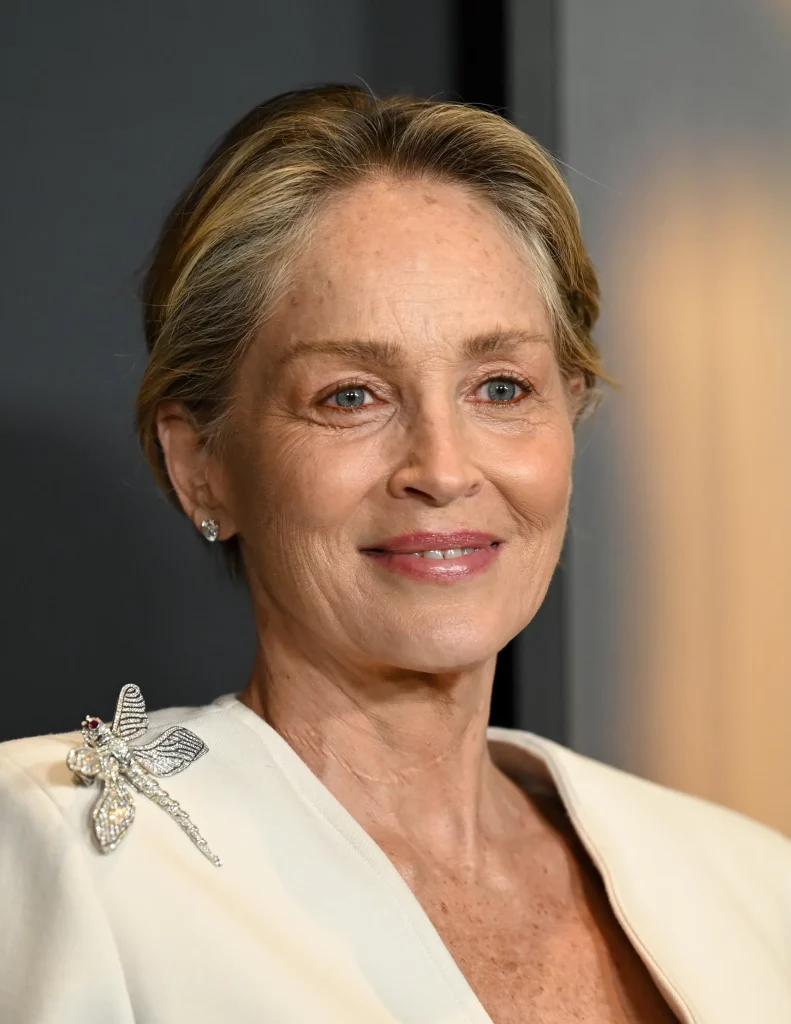
Sharon Vonne Stone (born March 10, 1958) is an American actress. Known for primarily playing femmes fatales and women of mystery on film and television, she became one of the most popular sex symbols of the 1990s. She is the recipient of various accolades, including a Primetime Emmy Award, a Golden Globe Award, and a nomination for an Academy Award. She was named Officer of the Order of Arts and Letters in France in 2005 (Commander in 2021).[1] After modeling in television commercials and print advertisements, Stone made her film debut as an extra in Stardust Memories (1980) and played her first speaking part in the horror film Deadly Blessing (1981). In the 1980s, she appeared in such films as Irreconcilable Differences (1984), King Solomon’s Mines (1985), and Above the Law (1988). She had a breakthrough with her part in Paul Verhoeven‘s science fiction film Total Recall (1990), before rising to international recognition when she portrayed Catherine Tramell in Verhoeven’s erotic thriller Basic Instinct (1992), for which she earned her first Golden Globe Award nomination.
Selma Blair
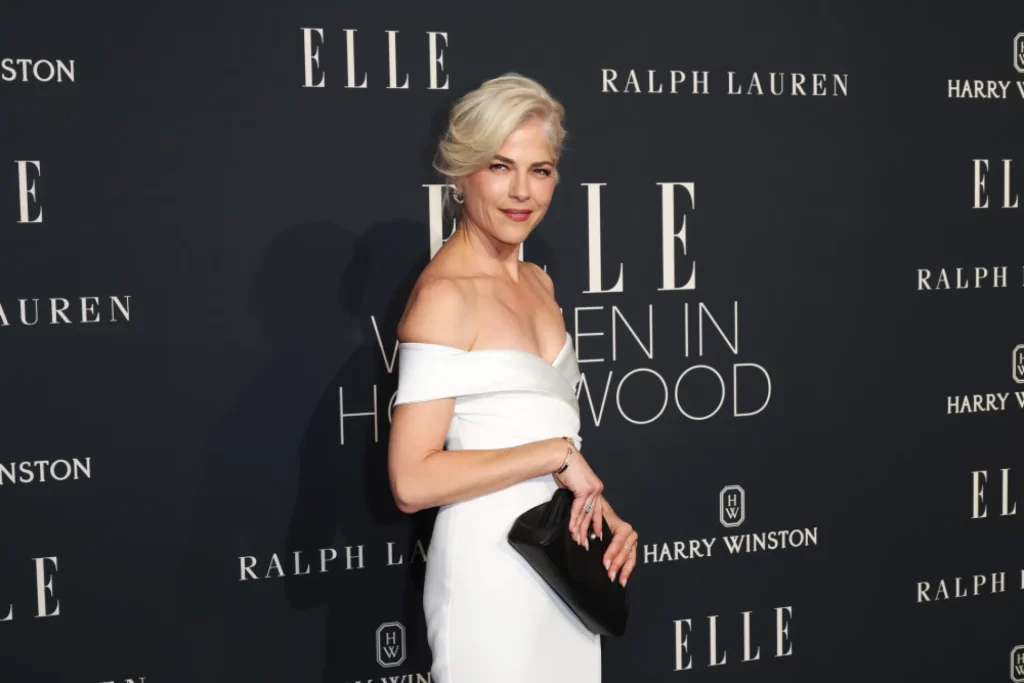
Selma Blair, an American actress, was diagnosed with multiple sclerosis (MS) in 2018. MS is a chronic autoimmune disease that affects the central nervous system, causing inflammation and damage to nerve fibers. Blair has been open about her diagnosis and has shared her experiences with the disease, including the challenges and treatments she faces. She has also spoken about the importance of advocating for herself and others with MS. In 2021, Blair announced that she was in remission from MS. However, she continues to manage the effects of the disease and has stated that she still experiences pain and fatigue. Blair’s journey with MS has been an inspiration to many, and she continues to raise awareness about the disease and the need for research and support.